
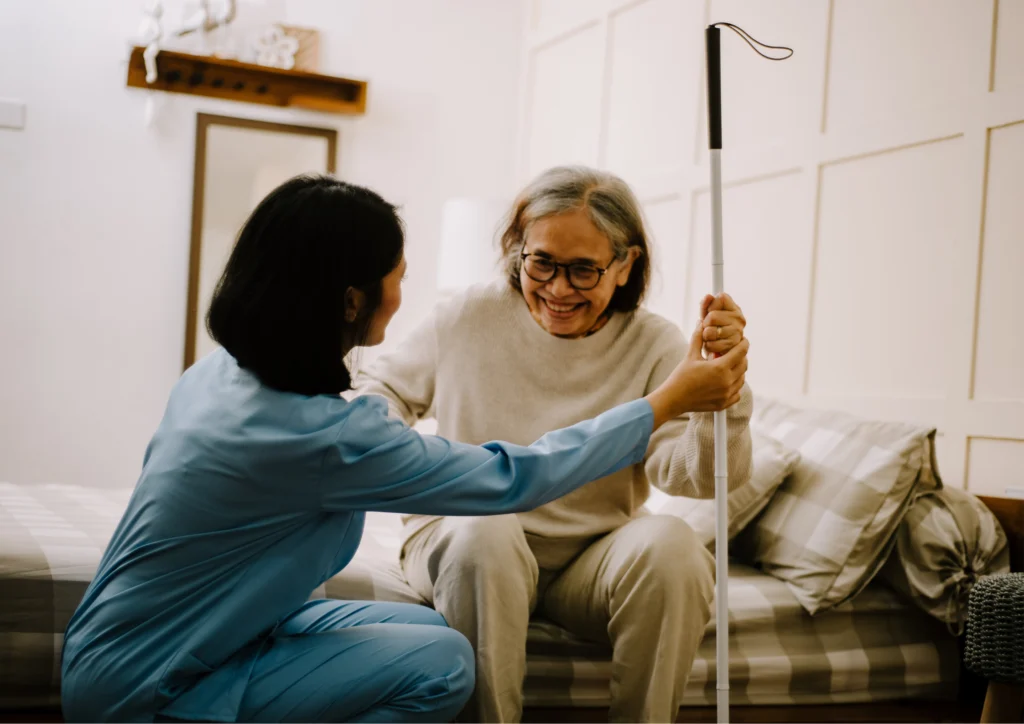
A fall that might barely bruise a younger person can mean a hip fracture and months of recovery for an elderly parent. That’s exactly why fall prevention for elderly family members deserves real, proactive attention — not just concern after an incident has already happened.
Why Falls Become More Dangerous With Age
Bone density naturally decreases with age, muscle strength declines, and balance and reaction time both slow down — combined, these factors make falls both more likely and more consequential than at younger ages.
Quick answer: Falls are the leading cause of injury-related hospitalization among adults over 65, largely due to age-related declines in bone density, muscle strength, and balance reaction time working together.
Removing Common Home Hazards
- Loose rugs or mats that can slip underfoot
- Cluttered walkways, especially near stairs
- Poor lighting in hallways and staircases
- Wet or slippery bathroom floors
Walking through the home specifically looking for these, room by room, catches far more hazards than a general glance ever does.
Improving Bathroom Safety Specifically
Bathrooms are among the most common fall locations for elderly individuals. Installing grab bars near the toilet and shower, using non-slip mats, and adding a shower chair can meaningfully reduce risk.
Quick answer: Bathrooms account for a disproportionately high percentage of falls among elderly individuals, making grab bars, non-slip mats, and adequate lighting some of the highest-impact fall prevention investments for any home.
Ensuring Proper Lighting Throughout the Home
Motion-sensor night lights in hallways and near the bed reduce the risk of falls during nighttime bathroom trips — a genuinely common scenario that often gets overlooked in fall prevention planning.
Encouraging Regular Balance and Strength Exercises
Simple exercises like standing on one leg (with support nearby), gentle yoga, or tai chi have shown real evidence in improving balance and reducing fall risk over consistent practice.
Reviewing Medications Regularly
Certain medications, or combinations of them, can cause dizziness or drowsiness that increases fall risk. A periodic medication review with a doctor helps identify and address this specific factor. [link to related guide on senior medication management here]
Ensuring Proper Footwear
Loose slippers or unsupportive footwear at home significantly increase slip risk. Well-fitted, non-slip shoes, even indoors, provide meaningfully better stability than typical house slippers.
Getting Regular Vision Checkups
Poor or outdated vision correction is a commonly overlooked fall risk factor. Annual eye exams help ensure vision isn’t quietly contributing to instability or misjudged steps.
Considering a Personal Alert System
For elderly individuals living alone, a wearable alert device ensures help can be reached quickly if a fall does happen, significantly reducing the time spent without assistance afterward.
FAQs
Q1: What is the most common location for falls among elderly people? Bathrooms are among the most frequent locations due to wet, slippery surfaces and limited grab support.
Q2: Can exercise really reduce fall risk in older adults? Yes, balance-focused exercises like tai chi have strong evidence supporting reduced fall risk with regular practice.
Q3: How often should elderly individuals get their vision checked? Annually is generally recommended, or more frequently if there are existing vision conditions.
Q4: Are grab bars necessary even for relatively mobile seniors? Yes, they provide important support during moments of instability that can happen unpredictably, regardless of general mobility level.
Q5: Can medications really increase fall risk? Yes, certain medications causing dizziness or drowsiness are a well-documented contributing factor to falls in older adults.
Q6: What should be done immediately after an elderly person falls? Check for injury before attempting to move them, and seek medical attention, especially if head injury or inability to move normally is involved.
Conclusion
Fall prevention for elderly family members isn’t about restricting their independence — it’s about removing unnecessary risks so they can move through their home safely and confidently. A few practical changes, done proactively rather than reactively, genuinely reduce the chances of a fall turning into a much more serious health event.