A child’s spine is not simply a miniature version of an adult’s. It is actively growing, which means it is simultaneously more adaptable and more vulnerable. Poor postural habits, excessive backpack weight, and prolonged sedentary activity during these critical developmental years can alter the natural curvature of the spine in ways that persist throughout adulthood.
In India, the combination of heavy school bags, competitive academic schedules, and rapidly increasing screen time among teenagers has created conditions for a generation-wide spinal health problem that is rarely acknowledged as such until symptoms become impossible to ignore.
The Developing Spine: What Makes Children Uniquely Vulnerable
Between the ages of 6 and 18, the spine undergoes rapid vertical growth, with secondary curvatures forming and stabilising during this period. The thoracic (mid-back) kyphosis and lumbar lordosis that give the adult spine its characteristic S-shape are not present at birth. They develop progressively as children begin to sit, stand, and walk.
When external forces — such as daily backpack loading or hours of forward-flexed screen time — consistently push against healthy curvature development, the growing vertebrae can respond by adapting to these forces rather than resisting them. The result, over time, can be exaggerated thoracic kyphosis (rounded upper back), flattened lumbar lordosis (loss of the natural lower back curve), or in some cases early-onset scoliosis.
The School Bag Problem: Numbers That Should Concern Every Parent
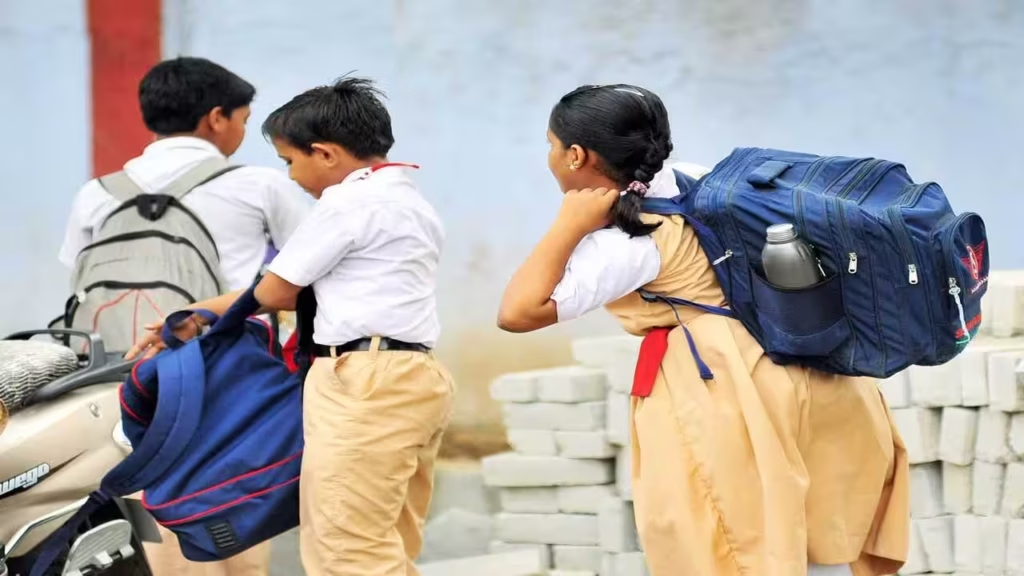
Multiple studies have assessed the relationship between school bag weight and spinal discomfort in children. The general consensus among orthopaedic professionals is that a bag should not exceed 10% of a child’s body weight. In practice, many Indian schoolchildren carry bags weighing 5-8 kg, which for a 30 kg child represents 16-25% of body weight — well above the threshold considered safe.
When a child carries a bag that exceeds safe limits, the spine compensates by leaning forward, reducing the natural lumbar curve, and placing excessive strain on posterior spinal muscles, facet joints, and discs. This is not discomfort that disappears at the end of the school day. It accumulates over months and years of daily exposure.
Gaming, Smartphones, and the Teenage Spine
The average Indian teenager now spends several hours daily on smartphones and gaming devices. The postural pattern associated with this screen use — chin projected forward, thoracic spine rounded, shoulders internally rotated — is sometimes called ‘gamer’s back’ or, more commonly, tech neck when it involves the cervical spine.
The long-term consequences of sustained forward-head posture are significant. For every 2.5 cm the head moves forward from its neutral position, the effective load on the cervical spine increases by roughly 4.5 kg. A teenager whose head is consistently 7-8 cm forward of neutral is placing an effective load of 18-25 kg on a cervical structure built to support approximately 5-6 kg. The treatment of cervical strain in younger patients is a core part of the work undertaken at ANSSI Wellness neck pain clinics across their network.
Warning Signs Parents Should Not Ignore
Children and teenagers rarely articulate spinal discomfort with precision. They may simply seem reluctant to engage in physical activity, complain of vague tiredness, or mention intermittent aches without being able to explain where or why. Specific warning signs that merit professional evaluation include:
- Consistently rounded shoulders or a visibly humped upper back
- One shoulder or hip noticeably higher than the other (a potential scoliosis indicator)
- Complaints of back or neck pain lasting more than two weeks
- Pain that interrupts sleep or significantly reduces activity
- Leg pain or tingling associated with back pain in a child (unusual and requires prompt attention)
What Can Be Done: A Parent’s Action Plan
Bag Management
Weigh your child’s school bag regularly and advocate actively with the school for lighter materials or locker access. Teach your child to use both shoulder straps, to position the bag close to the body, and to avoid bag weights that exceed 10% of their body weight.
Screen Time Posture
Position screens at eye level wherever possible. For desk work, a properly sized chair that allows the feet to rest flat on the floor, with the knees at 90 degrees and the lower back supported, dramatically reduces spinal loading. Brief postural breaks every 30-45 minutes allow spinal muscles to recover.
Movement and Strengthening
Regular physical activity that strengthens the core — swimming, yoga, martial arts, and team sports all qualify — provides the muscular support system that counteracts the postural forces of academic life. The spine thrives on movement and variety.
Professional Evaluation for Persistent Symptoms
If a child or teenager is reporting consistent back or neck pain, a professional evaluation by the non-surgical spinal specialists at ANSSI Wellness can identify whether structural changes are occurring and provide targeted guidance before problems become entrenched.
Conclusion
The spinal health of India’s young people is a public health issue that deserves far more attention than it currently receives. The habits formed between ages 6 and 18 shape the spine that will carry a person through their entire adult life. Addressing heavy school bags, screen posture, and insufficient physical activity now — with professional support where symptoms are already present — is one of the most consequential investments a family can make in a child’s long-term wellbeing.